





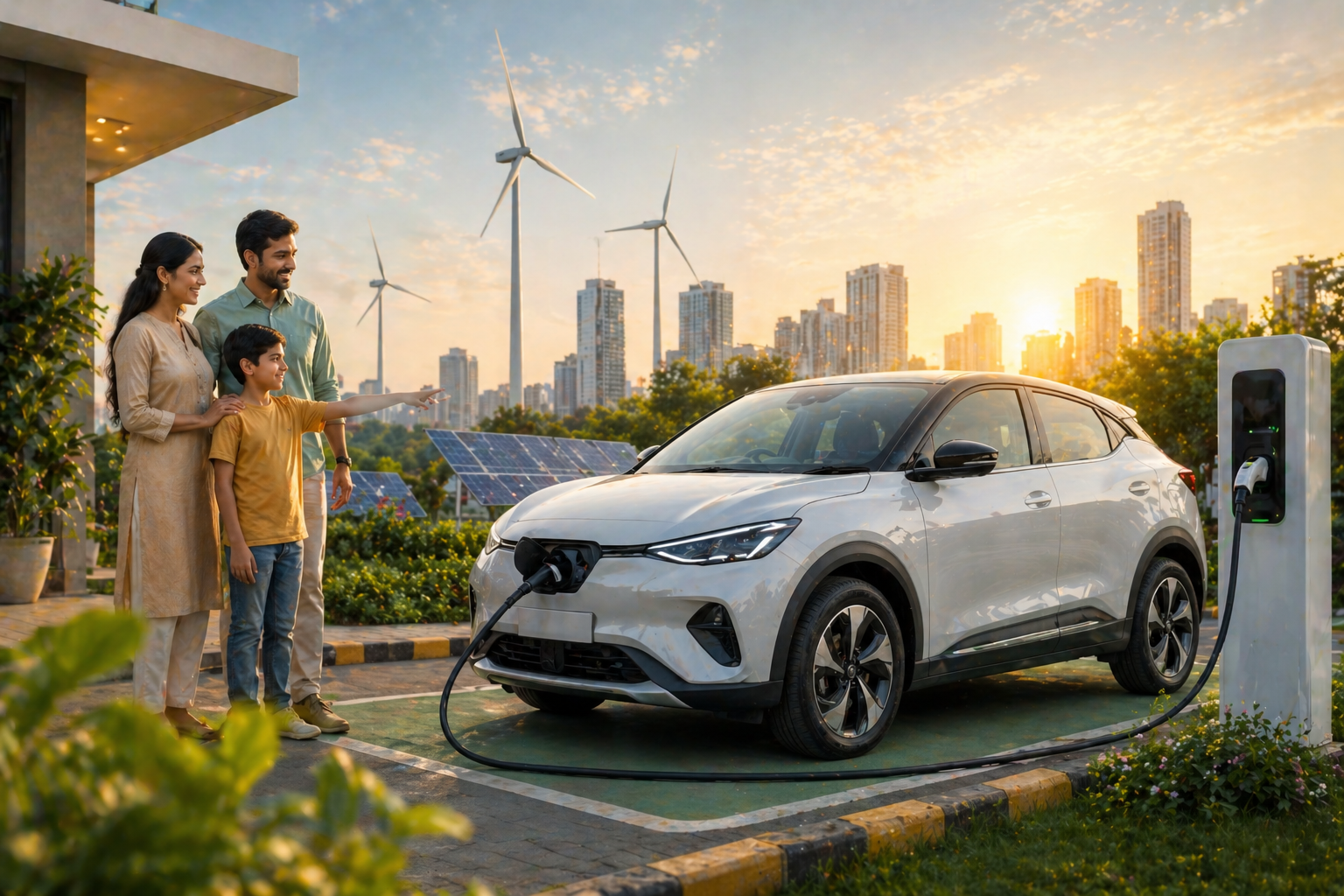
India’s EV Revolution: Why Electric Vehicles Are Slowly Becoming the Smart Choice for Everyday Indians in 2026
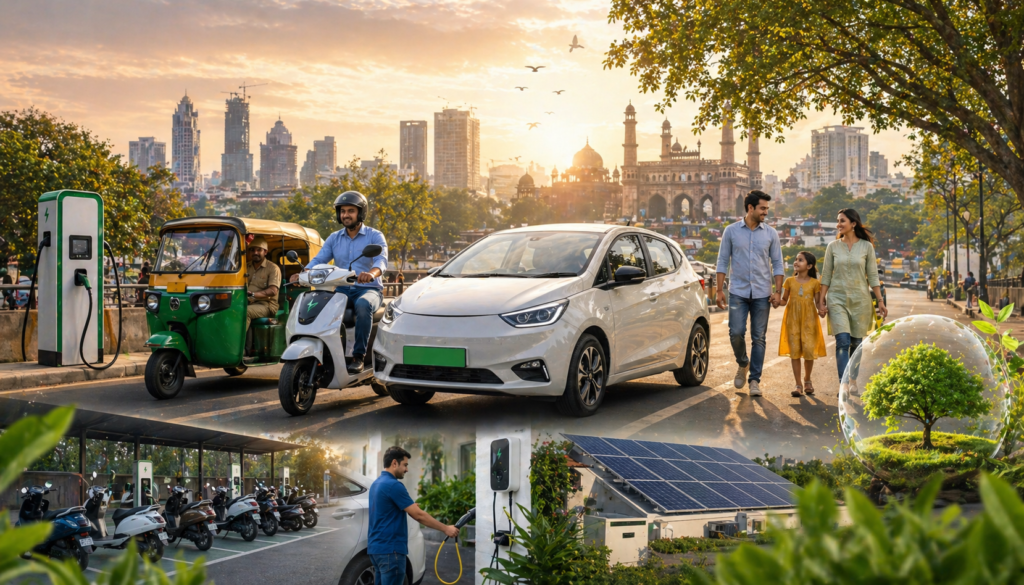
Hey friend, let’s have a real chat about something that’s quietly changing our roads. A few years ago, if you said “electric vehicle” most people pictured a fancy Tesla or some expensive gadget. Today in 2026, EVs are showing up in our neighbourhoods – on two-wheelers zipping through traffic, autos humming silently, and even some family cars. It’s not a sudden boom, but a steady shift that’s touching real middle-class lives.
I remember my cousin in Delhi who bought an electric scooter last year. He was tired of petrol prices touching the sky and spending hours in service centres. Now he charges at home and saves a good amount every month. His story isn’t unique anymore. Millions are thinking the same way. But is it all smooth? Not really. Let’s talk openly about what’s actually happening on Indian roads right now.
The Numbers That Show the Shift
In FY26, India sold around 2.45 million electric vehicles – a solid 25% jump from the previous year. Two-wheelers still lead the pack, followed by three-wheelers that have changed the life of auto drivers completely. Electric four-wheelers are growing too, though slower. Overall, EVs now make up roughly 7-8% of new vehicle sales. The government wants 30% by 2030, which sounds ambitious, but we’re moving in the right direction.
Why this growth? Petrol and diesel prices keep rising. Electricity is cheaper, especially if you charge at home during off-peak hours. Plus, newer models are coming with better range, faster charging, and prices that feel more reachable for many families. Companies are launching practical options suited for Indian conditions – good ground clearance, strong suspension, and features that handle our heat and monsoons.
Real Benefits That Matter in Daily Life
Let’s cut the marketing talk and focus on what actually helps.
Lower running costs – This is the biggest winner. An electric scooter can cost 70-80% less to run than a petrol one. For someone doing 40-50 km daily for work or deliveries, the savings add up fast – often Rs. 3,000-5,000 every month. Many auto drivers in cities have switched because their earnings went up after removing fuel costs.
Less maintenance – No engine oil changes, no spark plugs, fewer parts that wear out. Service is simpler and cheaper. Many owners say they visit workshops far less often.
Smooth and quiet ride – Instant torque means quick pickup in city traffic. No noise, no vibration – great for long city commutes. Families also like the peaceful drive on weekends.
Environmental angle – Every EV on the road means less pollution in our already crowded cities. For parents worried about their children’s health, this feels meaningful. Even if our electricity mix isn’t fully green yet, shifting from petrol reduces local air pollution dramatically.
Many veterans in the automobile world – those who have spent 20-30 years selling cars and bikes – say this is the biggest change they’ve seen since the shift from two-stroke to four-stroke engines.
The Honest Challenges We Still Face
Not everything is perfect, and pretending it is won’t help.
Higher upfront cost – Yes, this remains the biggest hurdle. An electric scooter still costs more than a comparable petrol one. Four-wheelers feel even steeper for average families. Many wait for prices to drop or better financing options.
Charging worries – In big cities, public charging is improving, but in smaller towns and highways, it’s still patchy. Range anxiety is real – especially during family trips or in peak summer when AC drains the battery faster.
Battery and resale fears – What happens after 5-7 years? Battery replacement cost and resale value are big questions in people’s minds. Though warranties are improving, trust takes time to build.
Infrastructure gap – We need way more charging stations, especially in residential societies and highways. Government schemes like PM e-Drive are helping, but execution on ground varies from state to state.
These are real issues. People aren’t blindly buying hype. They’re calculating carefully, talking to existing owners, and making decisions based on their daily needs.
Who Is Actually Adopting EVs Right Now?
- Delivery boys and gig workers love them for low costs.
- Young professionals in metros want stylish, tech-loaded scooters.
- Auto and rickshaw drivers see direct profit increase.
- Some families are buying small electric cars as second vehicles for city use.
The interesting part? Many experienced automobile dealers (the veterans with 15-25 years in the business) are now guiding customers wisely. They don’t push blindly. They help match the right EV to the buyer’s usage pattern – exactly what a good “Tiger of Performance” does.
What the Future Looks Like
By 2030, experts believe we could see millions more EVs on roads. Battery technology is improving – better range, faster charging, and hopefully lower costs. Indian companies are investing heavily in local manufacturing, which will reduce import dependence and bring prices down.
Government policies, falling battery costs, and rising fuel prices are working together. But the real game-changer will be when charging becomes as easy as filling petrol, and when middle-class families feel zero hesitation buying an EV as their main car.
For now, the revolution is practical and gradual – suiting Indian realities instead of copying Western trends blindly.
Small Tips If You’re Thinking of Going Electric
- Calculate your daily km first. If it’s under 100 km, most EVs make sense.
- Check home charging possibility – this is the biggest money saver.
- Talk to at least 3-4 current owners in your area.
- Look at total ownership cost, not just sticker price.
- Test ride properly – feel the acceleration and braking in real traffic.
The shift to EVs isn’t about being trendy. It’s about smarter choices for our pockets, health, and children’s future. Like every big change in India, it will take time, but it’s clearly happening.
What about you? Have you tried an EV yet – scooter, car, or even a rickshaw ride? What stopped you or convinced you? Share your real experience in the comments. Your story might help someone else decide wisely.
And if you are a veteran in the automobile industry – a dealer, engineer, or service expert with 15+ years of on-ground knowledge – your insights are pure gold for the next generation. This is exactly why Veteran Star 4 U exists – to celebrate silent performers who have shaped industries like automobiles through dedication and real expertise.
Drop us a message if your journey deserves the centerstage. Because experience like yours is the only currency that never loses value.
Stay safe on the roads, keep exploring new possibilities, and drive responsibly – whether electric or not.